
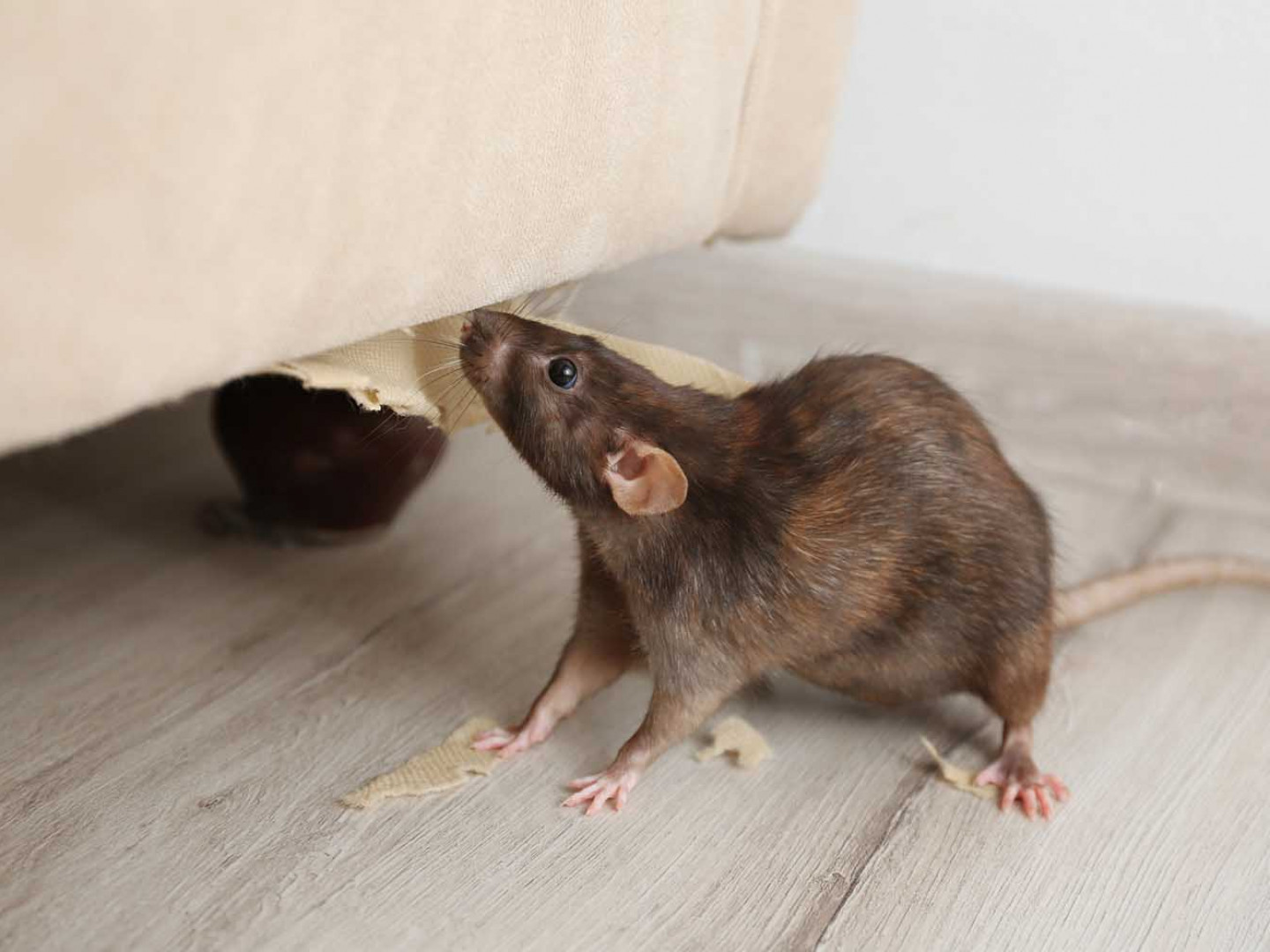
Most Bellingham homeowners are surprised to learn their mouse or rat problem didn’t start inside — rodents came in from outside through a specific gap, crack, or opening. Until that entry point is found and sealed, more rodents keep coming no matter how many traps you set. A house mouse can squeeze through an opening the size of a dime (about 6mm); a Norway rat needs a gap the size of a quarter. In Bellingham’s older housing stock, decades of settling and weathering make these openings common. The question isn’t whether entry points exist on your home — it’s where they are.
Why is finding entry points the most important step?
Most people who discover rodents reach for traps. That’s a reasonable instinct, but trapping without sealing entry points is like bailing a boat without plugging the hole. You may catch the rodents currently inside, but new ones enter as long as the access points stay open.
This is especially true in Bellingham’s climate. Fall and winter bring sustained cold and rain that drive mice and rats toward any warm, dry structure. Your home is warm, has water, and likely has food, so the motivation to enter is high. Effective rodent control requires two things working together: removing the rodents currently inside, and sealing the entry points that let them in. Do one without the other and you’ll face the problem again within weeks.
What are the 10 most common rodent entry points in Bellingham homes?
1. Gaps around utility pipe penetrations
This is the single most common entry point we find. Every home has pipes passing through exterior walls — water lines, drains, gas lines, electrical conduit, cable and internet lines — and each is a potential opening if the gap isn’t sealed. Check under kitchen and bathroom sinks, behind the washing machine, and where the dryer vent, conduit, and gas lines pass through walls. Even a 1cm gap is enough for a mouse. Seal with copper mesh packed tightly around the pipe, then caulk or foam over it. Steel wool alone is insufficient — it rusts and compresses.
2. Gaps under exterior doors
Threshold seals under front, back, garage-entry, and sliding glass doors compress and wear over years of use. Crouch down and look for daylight from outside, or slide a business card under the door — if it passes easily, so can a mouse. Replace worn threshold seals and door sweeps, adjust doors thrown off by settling, and make sure garage-door seals run the full width with no corner gaps.
3. Foundation cracks and gaps
Bellingham’s wet climate and older homes create frequent foundation issues — concrete cracks from settling and freeze-thaw, mortar gaps in block foundations, and openings where the sill plate meets the foundation top. Walk the full perimeter at ground level. Any crack wider than 6mm matters. Fill small cracks with hydraulic cement or polyurethane caulk; back larger gaps with hardware cloth before sealing, and use expanding foam plus hardware cloth at the sill plate.
4. Crawl space vents and access panels
Crawl spaces are very common here, and their foundation vents are supposed to have screens that often deteriorate, get damaged, or go missing. Inspect every vent and the access hatch for torn screens and loose fits. Replace damaged screens with galvanized hardware cloth (1/4-inch mesh) secured with screws or staples — not just pushed in — and make sure access panels latch tightly.
5. Where siding meets the foundation
The joint between exterior siding and the foundation is frequently overlooked. Wood, vinyl, or fiber-cement siding doesn’t always meet the foundation with a sealed joint, and gaps here open directly into wall cavities. Look for visible gaps, siding pulled away at the base, or rot. Caulk the joint with a rodent-resistant sealant, add aluminum flashing or sheet metal over larger gaps, and repair rot-damaged wood first.
6. Soffit vents and roof vents
The upper home is just as vulnerable. Soffit vents in the roofline overhang are commonly used by rodents and squirrels to reach attics, and gable, ridge, and roof vents allow access when screens fail. Inspect from below (binoculars help) for bent, torn, or missing covers and gnaw marks. Replace damaged covers, install hardware cloth behind open vents, and use exclusion-rated vent covers. This area is often best handled by a professional who can safely reach the roofline.
7. Garage doors and the garage interior
The garage is one of the most common entry points — and the door between the garage and living space is rarely sealed as well as an exterior door. Inspect the rubber bottom seal for gaps, especially at corners, and check the side jambs for daylight. Replace the bottom seal, add a garage-door threshold seal on the floor, weatherstrip the sides and top, and make sure the interior door has a working sweep.
8. HVAC penetrations and dryer vents
Heating and cooling systems create multiple wall penetrations — mini-split refrigerant lines, dryer ducts, exhaust fans, and fresh-air intakes. Find where the dryer vent exits and check the surrounding wall, locate all HVAC penetrations, and inspect bathroom exhaust exits. Caulk around every duct and pipe, make sure dryer-vent flaps close fully, and seal mini-split line sets with foam covered by a metal line-set cover.
9. Roof-to-wall junctions and dormers
Where rooflines meet walls — at dormers, additions, and step-flashing areas — gaps develop as materials age and shift. These higher openings are often used by roof rats. Inspect every spot where a roof surface meets a vertical wall for gaps in step flashing and deteriorated caulk. Seal roof-wall joints with a roofing-rated sealant and fill step-flashing gaps. This work usually requires roof access and is best done professionally.
10. Deck and porch attachments
Where decks, porches, and additions attach to the house, gaps form around the ledger board that fastens through the exterior wall, and the sheltered space beneath provides harborage. Inspect the ledger-board joint and check under decks for burrows, droppings, and gnaw marks. Caulk around the ledger board, install hardware cloth under decks to block harborage without stopping drainage, and clear out accumulated debris.
What is the right sequence for sealing entry points?
Sequence matters — sealing in the wrong order can trap rodents inside your walls.
- Confirm whether rodents are currently active inside.
- If there’s an active infestation, begin interior trapping before sealing the exterior.
- Seal entry points only after the interior population is under control.
- Use rodent-proof materials — hardware cloth, copper mesh, sheet metal with caulk.
- Follow up to confirm no new activity after sealing.
Do not seal entry points first while rodents are inside — you’ll trap them in the walls and create a decomposition problem that takes weeks to resolve.
What materials actually work for rodent exclusion?
Rodents chew through wood, drywall, standard foam, and soft caulk. The primary barrier must be metal:
- Galvanized hardware cloth (1/4-inch mesh): the workhorse for covering vents and large gaps. Secure with staples or screws, not just pressed in.
- Copper mesh: ideal for packing around pipes and irregular gaps before caulking. It won’t rust, compress, or chew easily.
- Sheet metal / aluminum flashing: for larger openings at roof-wall transitions and ledger boards.
- Polyurethane caulk: a finishing seal over mesh, not a standalone barrier.
- Expanding foam (with caution): only as a final seal over installed mesh — rodents chew through foam used alone.
How does Sasquatch Pest Control handle exclusion in Bellingham?
Professional exclusion starts with a thorough, systematic inspection — from the roofline to the crawl space — not just a walk around the foundation. We look for grease marks, gnaw marks, and droppings that point toward active entry points and assess every gap in the building envelope. Once entry points are identified and the interior status is confirmed, we sequence the work correctly: interior trapping first if rodents are active, then exclusion sealing. We use rodent-resistant materials and document every entry point sealed so you have a record of the work. Our work is backed by a 100% service guarantee — no contracts, no pressure, and no unnecessary services.
Frequently Asked Questions About Rodent Entry Points in Bellingham
How do mice get into Bellingham homes?
Mice enter through gaps as small as 6mm — roughly the diameter of a pencil. The most common entry points are gaps around utility pipe penetrations, worn or missing threshold seals under exterior doors, foundation cracks, damaged or missing soffit and crawl space vent screens, gaps where siding meets the foundation, and openings around HVAC and dryer vent penetrations. Bellingham’s older housing stock is especially prone to these vulnerabilities after decades of settling and material deterioration, and the cool, rainy winters that drive rodents toward shelter make fall and winter the peak season for entry.
How do I find where mice are getting into my house?
Start with a systematic exterior walk-through at ground level, looking closely at every spot where utilities enter the building, the base of all exterior doors, the foundation-to-siding transition, and all vents. Bring a flashlight and a pencil — if the pencil fits through a gap, a mouse can too. Inside, follow the evidence: droppings, grease marks along baseboards, and gnaw marks show where rodents travel and often lead back toward entry areas. A professional inspection is the most reliable method because experienced technicians know the entry points most commonly missed in Bellingham-area construction.
What materials can I use to seal rodent entry points?
The most effective materials are galvanized hardware cloth (1/4-inch mesh) for vents and larger openings, copper mesh for packing around pipes and irregular gaps, aluminum flashing or sheet metal for roof-wall transitions and larger structural gaps, and polyurethane caulk used over mesh as a final sealant. Avoid relying on standard expanding foam, steel wool, or wood alone — rodents chew through or compress them. The key principle is that the primary barrier must be metal, with caulk as a secondary seal over the metal rather than the sole barrier.
Can rodents chew through walls to get into my Bellingham home?
Yes. Rodents can chew through wood, drywall, soft metals, vinyl siding, standard foam sealant, and caulk. Norway rats have some of the strongest jaw pressure of any small mammal and can work through soft construction materials with sustained effort, while mice enlarge small gaps by gnawing the edges. That said, rodents typically prefer to use existing gaps rather than create new ones — they follow air currents and odors to find openings and widen what’s already there. That’s why exclusion focuses on finding and sealing existing gaps with metal-based materials that can’t be chewed through.
Should I seal entry points myself or hire a professional?
DIY exclusion can address obvious, accessible entry points — a worn door sweep, a visible gap around a dryer vent, a clearly missing crawl space vent screen. But many of the most-used entry points in Bellingham homes are hard to locate without experience, including subtle roofline gaps, crawl space penetrations, and minor foundation gaps. More importantly, if rodents are currently active inside, entry points must be sealed in coordination with interior removal — sealing first traps rodents in the walls and creates a decomposition problem. Professional exclusion includes proper sequencing, comprehensive inspection, and rodent-proof materials.
Does Sasquatch Pest Control offer rodent exclusion in Bellingham and Whatcom County?
Yes. Sasquatch Pest Control provides full rodent exclusion services throughout Bellingham, Ferndale, Lynden, Blaine, Birch Bay, Sudden Valley, Everson, Nooksack, and all of Whatcom County. Our exclusion service includes a complete property inspection, documentation of all identified entry points, sealing with rodent-proof materials, interior trapping where needed, and follow-up visits to confirm resolution. There are no long-term contracts, and we back our work with a 100% service guarantee. Call 360-410-2199 for a free inspection.
How long does rodent exclusion take?
A typical residential exclusion inspection takes 45 minutes to 1.5 hours depending on the home’s size and complexity. Sealing identified entry points usually takes 1 to 3 hours for a typical home, though extensive roofline issues, complex crawl spaces, or numerous entry points can take longer. We complete a follow-up visit 2 to 3 weeks after the work to confirm that interior trapping has controlled the population and that no new entry points have appeared. The entire process from initial inspection to confirmed resolution typically spans 3 to 6 weeks.
Ready to seal rodents out for good?
Find and seal the gaps before the next cold snap drives rodents indoors. Call Sasquatch Pest Control at 360-410-2199 for a free inspection and exclusion assessment in Bellingham and throughout Whatcom County.
Sasquatch Pest Control offers honest, local, no-contract pest control — backed by our 100% service guarantee.Get a Free Quote