
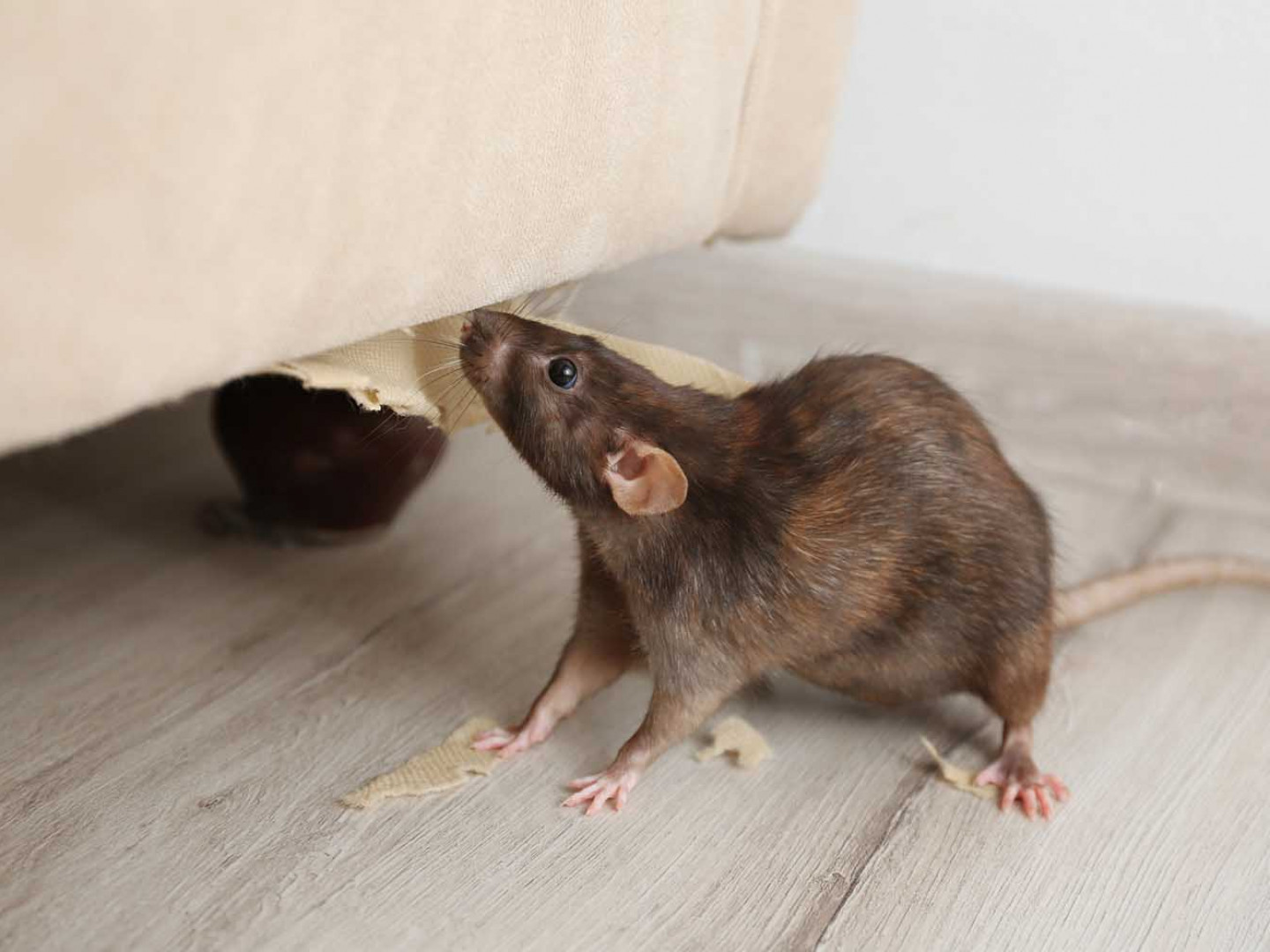
The best way to stop a winter rodent problem in Bellingham is to act in the fall, before rats and mice move in. As the first cold nights arrive, rodents start hunting for a warm, dry place with food and water to overwinter — and your home is a prime target. Sealing entry points before they get inside is the single most effective thing you can do, because evicting established rodents is far harder than keeping them out. Fall rodent-proofing comes down to three things: sealing gaps, removing food and water, and cutting off the shelter and “highways” that lead rodents to your house.
Fall is our busiest rodent season across Bellingham, Ferndale, Lynden, and Whatcom County. Here’s exactly how to squatch-proof your home before winter sets in.
Why do rats and mice come indoors in the fall?
It’s about survival. Rodents don’t hibernate — they stay active all winter, so they need a reliable source of warmth, food, and water to make it through. As temperatures drop through September and October, the shelter of your home becomes dramatically more attractive than the cold, wet outdoors of a Pacific Northwest winter.
In Whatcom County, the two rodents we deal with most are the Norway rat, which works the lower levels — crawl spaces, basements, and foundations — and the roof rat and house mouse, which climb to reach attics and upper walls. All of them share the same fall instinct: get inside before the weather turns. That’s why a home that was rodent-free all summer can suddenly have activity in October.
How small a gap can a rodent squeeze through?
Smaller than most people believe, which is why casual sealing often misses the mark. A mouse can fit through a gap about the size of a dime — roughly a quarter inch. A rat can get through an opening about the size of a quarter — around a half inch. If a pencil fits into a gap, a mouse likely can too.
Rodents are also strong chewers. They gnaw small cracks into usable entry points, enlarge gaps around pipes, and get through many soft materials. That’s why effective sealing uses rodent-resistant materials — steel wool packed into gaps, hardware cloth, and proper sealants — rather than expanding foam or caulk alone, which rodents chew right through.
Where do rodents get into Bellingham homes?
The entry points are predictable once you know where to look. On most homes in our area, the usual suspects are:
- Utility penetrations — where water lines, gas lines, electrical, cable, and dryer vents pass through exterior walls
- The garage — under a worn garage-door weatherstrip and around the door frame
- Foundation cracks and vents — crawl space vents with damaged screens are a classic entry point
- The roofline and eaves — gaps where the roof meets the walls, around fascia, and at soffit vents (a favorite of roof rats)
- Windows and doors — worn weatherstripping, gaps under exterior doors, and missing door sweeps
- Chimneys and roof vents without proper caps or screening
- Where the deck or porch meets the house, and any gaps behind siding
How do I seal the entry points?
Exclusion is the foundation of rodent prevention. The goal is to close every gap a rodent could use before the fall migration indoors. Work through the exterior methodically:
- Inspect the full perimeter, foundation to roofline, looking for any gap a dime or quarter could pass through.
- Pack gaps around pipes and wires with steel wool or copper mesh, then seal over it so it stays in place.
- Install or replace door sweeps on exterior doors and the garage, and repair worn garage-door weatherstripping.
- Screen vents — crawl space, foundation, attic, gable, and soffit — with sturdy hardware cloth, replacing any that are torn or rusted.
- Cap the chimney and screen roof and plumbing vents.
- Repair damaged screens and re-seal gaps around windows and doors.
Why steel wool, not foam: rodents chew straight through expanding foam and standard caulk. Steel wool, copper mesh, and hardware cloth resist gnawing — use those to block the gap, and use sealant only to hold them in place.
How do I cut off food and water?
Even a well-sealed home is more attractive if there’s an easy meal waiting. Removing food and water sources makes your property far less appealing and reduces the pressure on those entry points.
- Store pantry staples — grains, cereal, pet food, birdseed — in sealed metal or heavy plastic containers, not cardboard or bags.
- Clean up crumbs, spills, and dirty dishes promptly, especially in the kitchen and pantry.
- Secure garbage and compost with tight-fitting lids, and keep bins away from the house.
- Don’t leave pet food bowls out overnight, and store the bag sealed.
- Pick up fallen fruit and clean up under bird feeders, or pause feeding through the worst of the season.
- Fix leaks and reduce moisture — dripping faucets, condensation, and damp crawl spaces give rodents the water they need.
How do I remove shelter and rodent highways?
Rodents travel along edges and cover, and they nest in clutter. Trimming back the landscape and clearing harborage removes the pathways and hiding spots that lead them to your foundation and roof.
- Trim tree limbs and shrubs back from the roof and walls — overhanging branches are a direct bridge for roof rats onto your home.
- Cut back ivy and dense vegetation growing against the foundation and siding.
- Move woodpiles, lumber, and debris away from the house and up off the ground.
- Clear leaf litter and yard debris from against the foundation.
- Declutter the garage, shed, and crawl space, where rodents love to nest undisturbed.
- Keep grass trimmed and reduce ground cover near the foundation.
What are the early warning signs I already have rodents?
As you prep for winter, watch for signs that rodents have already moved in — the sooner you catch it, the easier it is to resolve:
- Droppings along baseboards, in the pantry, garage, or attic
- Scratching or scurrying sounds in walls or ceilings, especially after dark
- Gnaw marks on food packaging, wood, or wiring
- Grease marks or smudges along walls and beams where rodents travel repeatedly
- Nests of shredded paper, insulation, or fabric in hidden corners
- A musky odor in enclosed spaces like the attic or under sinks
Rodents breed quickly — a small fall problem can become a serious winter infestation in weeks. If you’re seeing any of these signs, it’s worth an inspection now rather than hoping it resolves on its own.
Why is professional rodent-proofing worth it?
You can handle a lot of fall prep yourself, and every step above helps. But comprehensive rodent-proofing means finding and sealing every gap — including ones on the roofline, in the crawl space, and behind fixtures that are genuinely hard to reach and easy to overlook. Missing even one active entry point can undo the rest of the work, because rodents only need a single way in.
Our exclusion-focused approach is built around finding those gaps. We inspect the whole structure, identify every likely entry point, seal them with rodent-resistant materials, and address the food, water, and shelter conditions drawing rodents to your property. If rodents are already inside, we handle removal as part of the plan — no contracts, no scare tactics, no hidden fees, and a 100% service guarantee behind the work.
Frequently Asked Questions
When should I start rodent-proofing my home for winter?
Early fall is ideal — September and October, before the first sustained cold pushes rodents to seek shelter. The whole point of prevention is to seal your home and remove attractants before rats and mice move in, because keeping them out is far easier than getting them out once they’re nesting in your walls or attic. If you wait until you hear scratching in the ceiling, you’re already dealing with an established problem.
How small a gap can a mouse or rat fit through?
A mouse can squeeze through a gap about the size of a dime — roughly a quarter inch — and a rat through an opening about the size of a quarter, around half an inch. If a pencil fits in a gap, a mouse likely can too. Rodents are also strong chewers and can enlarge small cracks, which is why sealing needs rodent-resistant materials rather than just foam or caulk.
Why won’t expanding foam or caulk keep rodents out?
Because rodents chew straight through both. Standard caulk and expanding foam are fine for air-sealing, but they’re no barrier to a determined rat or mouse. Effective exclusion uses materials rodents can’t gnaw through — steel wool or copper mesh packed into gaps, and hardware cloth over vents — with sealant used only to hold those materials in place, not as the barrier itself.
Does removing food really make a difference if my house is sealed?
Yes. Sealing is the priority, but reducing food and water lowers the overall pressure on your home and makes it a less appealing target. Rodents are drawn to easy meals — unsecured pantry food, pet food left out, crumbs, garbage, fallen fruit, and birdseed. Storing food in sealed containers, cleaning up promptly, and fixing leaks all make your property less inviting.
How do I know if I already have rodents in my walls?
Common signs include droppings along baseboards or in the pantry, garage, and attic; scratching or scurrying sounds in walls and ceilings after dark; gnaw marks on packaging, wood, or wiring; grease smudges along travel paths; nests of shredded material; and a musky odor in enclosed spaces. If you notice any of these, it’s worth an inspection soon, because rodents breed quickly and a small problem escalates fast.
Can I rodent-proof my home myself, or do I need a professional?
Much of the prep — trimming branches, storing food, decluttering, installing door sweeps — is great DIY work. But comprehensive exclusion means finding and sealing every gap, including hard-to-reach spots on the roofline and in the crawl space, and missing even one active entry point undoes the effort. A professional inspection catches the gaps that are easy to overlook and seals them with the right materials, which is what makes rodent-proofing actually hold.
Do you handle fall rodent-proofing in Bellingham and Whatcom County?
Yes. We provide rodent exclusion and prevention throughout Bellingham, Ferndale, Lynden, Blaine, and the surrounding Whatcom County communities. We inspect the whole home, seal entry points with rodent-resistant materials, address the conditions attracting rodents, and remove any that are already inside. Call us for a free inspection — no contracts, no scare tactics, and everything backed by our 100% service guarantee.
Ready to squatch-proof your home?
If you want your Bellingham home sealed before the rodents move in this winter, call or text Sasquatch Pest Control at 360-410-2199 for a free inspection — honest, local, and backed by our 100% service guarantee.
Sasquatch Pest Control offers honest, local, no-contract pest control — backed by our 100% service guarantee.Get a Free Quote