Removing a wasp nest yourself is one of the riskier projects a Bellingham homeowner can take on. Wasps and hornets sting repeatedly, defend their nests in swarms, and can trigger dangerous allergic reactions — and most people can’t tell how big a nest really is until it’s too late. Store-bought sprays often make things worse by scattering the colony instead of eliminating it. Here’s why DIY wasp removal goes wrong so often, and what a professional does instead.
Why is DIY wasp nest removal so dangerous?
Wasps sting repeatedly and attack in numbers
Unlike a honeybee, a single wasp or hornet can sting you over and over. Disturb a nest and you’re rarely dealing with one wasp — you’re provoking the whole colony at once. Yellowjackets and bald-faced hornets, both common around Bellingham, are especially quick to defend their nests, and a startled colony can deliver dozens of stings in seconds.
Allergic reactions can be life-threatening
Stinging insects are among the more common causes of serious insect-related emergency visits in the U.S. every year. Even people who’ve never reacted before can develop a severe allergic reaction (anaphylaxis), which is a medical emergency. If someone who’s been stung shows difficulty breathing, swelling of the face or throat, dizziness, or a spreading rash, call 911 immediately.
Ladders, panic, and falls
Many nests sit up under eaves or in trees, so DIY removal often means standing on a ladder — right where a swarm of angry wasps is least survivable. The natural reaction to being stung is to swat, flinch, and run, and doing that on a ladder is how a wasp problem turns into a fall and a broken bone.
You can’t see the full nest
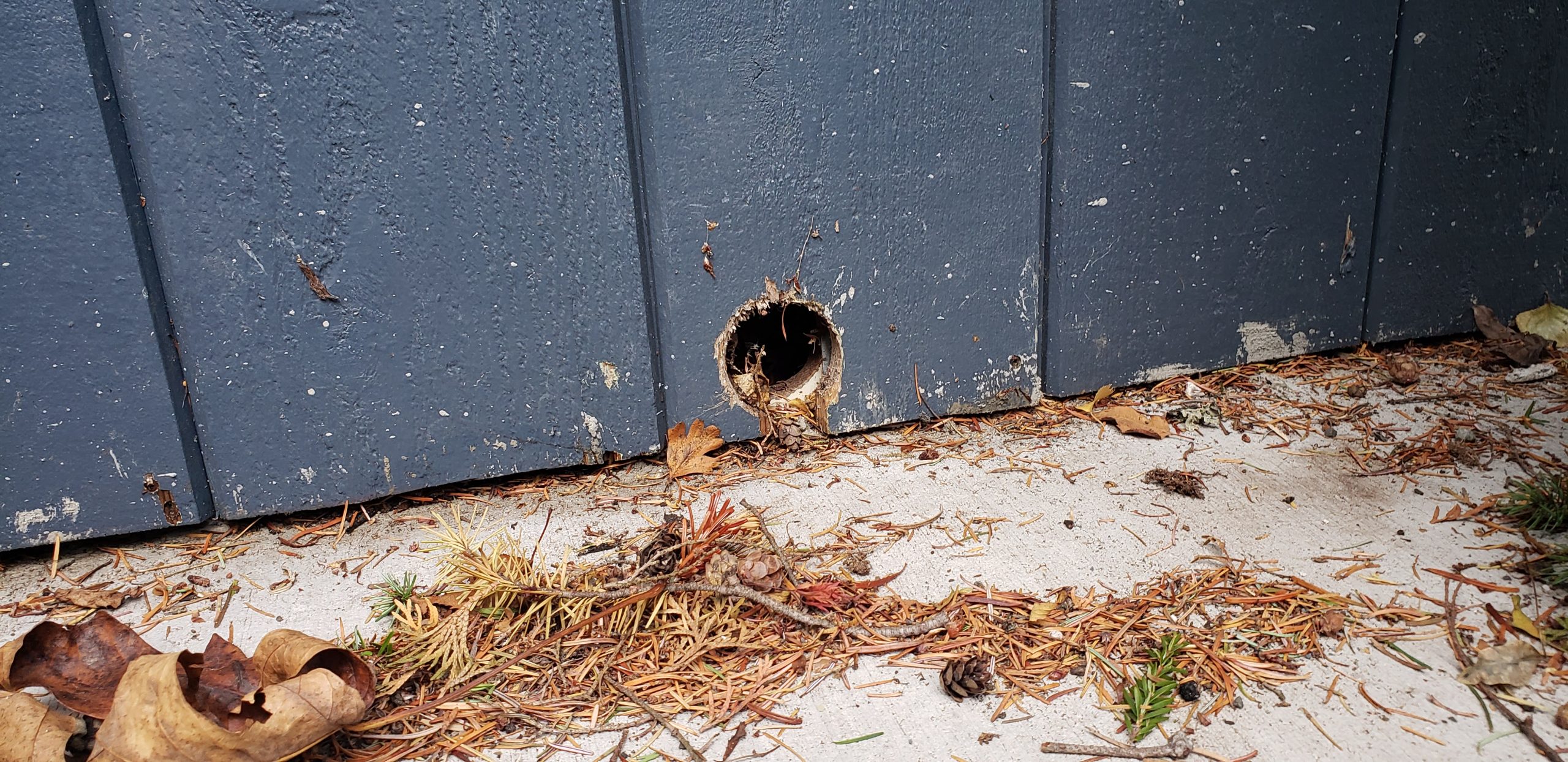
The papery nest you can see may be a fraction of the problem. Yellowjackets frequently nest inside wall voids or underground, where the visible entrance hides a colony of hundreds. Treating what you can see without addressing the rest leaves the colony intact and angry.
Why don’t store-bought wasp sprays work very well?
Retail sprays can knock down a few wasps at the entrance, but they rarely solve the problem. They often fail to reach the queen deep inside the nest, so the colony rebuilds. Spraying an aerial nest usually just enrages the survivors, and spraying into a wall-void nest can drive wasps inward — into your living space — instead of out. Aerosol range is also limited, which forces you dangerously close to the nest.
What are the biggest DIY mistakes people make?
- Knocking a nest down with a broom or stick, which releases the entire colony at once
- Using fire or gasoline — an enormous fire risk that rarely kills the colony anyway
- Sealing a wall-void entrance, which traps wasps inside and forces them into the home
- Spraying into a ground hole and stepping back into the flight path
- Working during the day when the colony is most active
- Wearing dark or bright clothing and scented products, which can provoke wasps
- Attempting removal in late summer, when colonies are largest and most aggressive
What time of year is worst for DIY removal in Bellingham?
Late summer and early fall — roughly August through September — are the most dangerous. By then a colony that started as a golf-ball-sized nest in spring can hold hundreds of workers, and as natural food dwindles the wasps become more aggressive and defensive. A nest that seemed manageable in June is a very different situation by late August. That’s also why early-season professional removal, while the nest is small, is so much safer.
What does Sasquatch do instead?
Professional removal is about controlling the situation rather than provoking it. Our process looks like this:
- Inspect the property and identify the species, since paper wasps, yellowjackets, and hornets each call for a different approach
- Locate the full nest, including hidden portions inside walls or underground
- Treat the colony with professional-grade products and proper protective equipment, timed to reach the whole nest
- Remove the nest safely where appropriate and confirm the colony is eliminated
- Seal and advise on entry points so wasps don’t rebuild in the same spot next spring
- Stand behind the work with our 100% service guarantee
When should you call a professional immediately?
- The nest is near a door, walkway, deck, or other high-traffic area
- The nest is inside a wall, attic, or the ground where you can’t see its size
- Anyone in the household has a known sting allergy
- The nest is large or you’re seeing heavy wasp traffic
- The wasps are already acting aggressive and defensive
In any of these cases, don’t risk it. A single call is far cheaper than an ER visit — and much less painful.
Frequently Asked Questions
Is it ever safe to remove a wasp nest myself?
For a very small, newly started paper-wasp nest in an open, easy-to-reach spot early in spring, some homeowners handle it — but even then there’s real risk. Anything involving yellowjackets, hornets, a wall or ground nest, a nest you can’t fully see, a ladder, or a household sting allergy should go to a professional.
What should I do if I get stung multiple times?
Move away from the nest calmly but quickly, and watch for signs of a severe reaction — trouble breathing, swelling of the face or throat, dizziness, or a spreading rash. Those are a medical emergency; call 911 right away. For ordinary localized stings, ice and an over-the-counter antihistamine usually help, but see a doctor if you’re concerned.
Can I just spray a nest at night?
Wasps are less active at night, which is why the advice circulates, but it’s still risky. You can’t see well, you may misjudge the nest’s size, hidden portions in walls or the ground go untreated, and a partial hit leaves a defensive colony behind. Professional treatment is safer and more likely to actually eliminate the colony.
Will knocking down a nest get rid of the wasps?
No — it usually makes things worse. Knocking down a nest releases the colony and doesn’t kill the wasps, which will often rebuild nearby. For yellowjackets and hornets especially, this is a fast way to get badly stung.
How much does professional wasp removal cost in Bellingham?
It depends on the species, the nest’s size, and its location — an exposed paper-wasp nest is simpler than a yellowjacket colony inside a wall. Sasquatch provides a free inspection and an upfront quote before any work, with no contracts and no hidden fees.
What if the nest is inside my wall?
Wall-void nests should always be handled professionally. Sealing the entrance traps wasps inside, where they can chew through into living space, and spraying blindly rarely reaches the whole colony. We locate the nest, treat it correctly, and then advise on sealing the entry once the colony is gone.
Ready for safe, professional wasp removal?
Skip the ladder and the guesswork — call or text Sasquatch Pest Control at 360-410-2199 for a free inspection and upfront quote across Whatcom County, backed by our 100% service guarantee.
Sasquatch Pest Control offers honest, local, no-contract pest control — backed by our 100% service guarantee.Get a Free Quote