
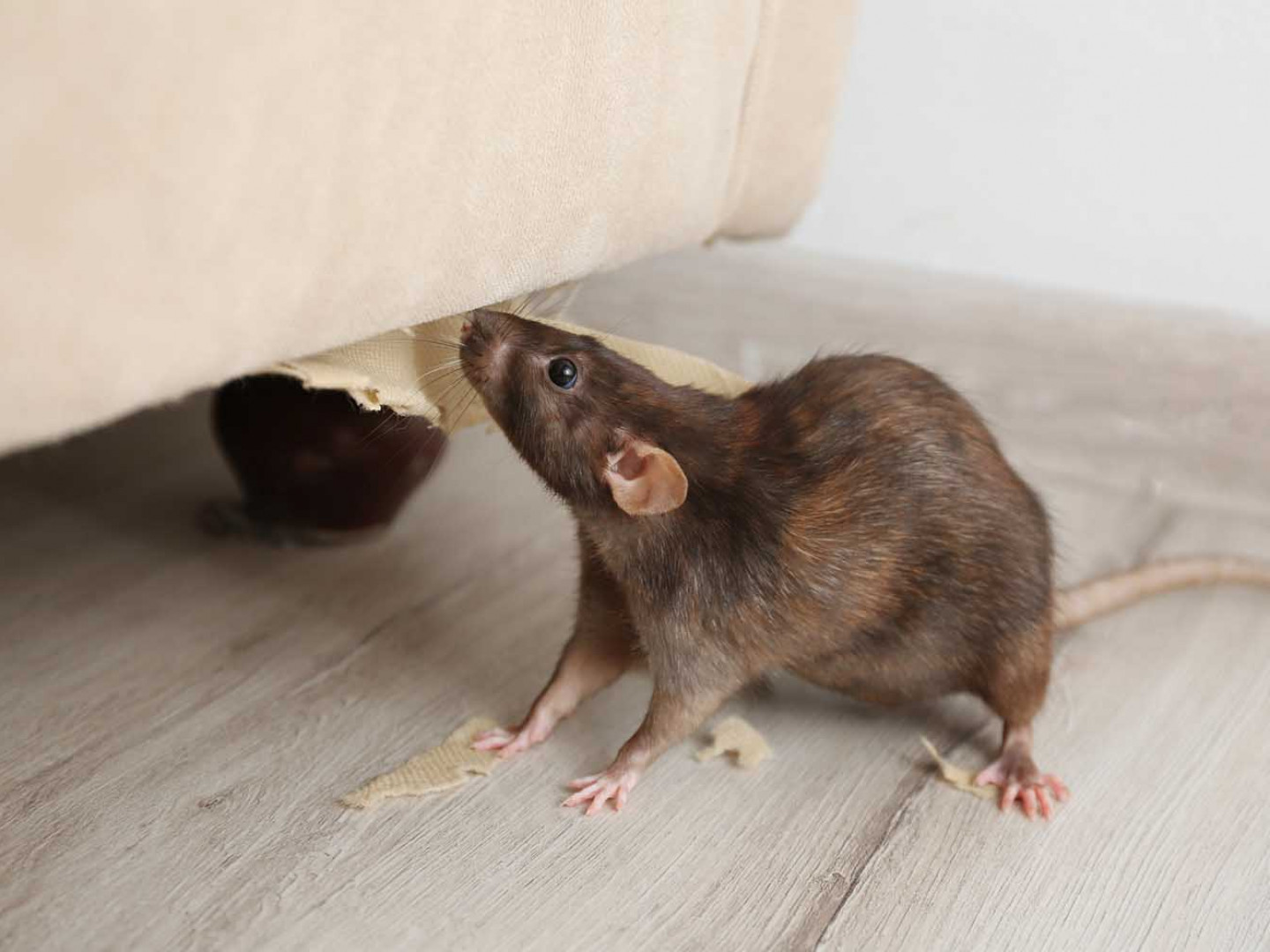
If you’re dealing with a rodent problem in your Bellingham home, the first thing to figure out is whether you have rats or mice. They’re different animals with different behaviors, biology, and vulnerabilities, and a plan built for one won’t reliably eliminate the other. The fastest way to tell them apart is usually their droppings: mouse droppings are the size of a grain of rice with pointed ends, while rat droppings are the size of a raisin with blunt ends.
What are the basic differences between rats and mice?
Size is the most obvious difference, but it’s worth being precise because people often misjudge it.
Mice
The house mouse (Mus musculus) is the most common mouse in Bellingham homes. Adults weigh half an ounce to one ounce and measure 5–8 inches nose to tail. Look for:
- Small, slender bodies and pointed snouts
- Large ears relative to head size
- A thin, lightly haired tail roughly as long as the body
- Tiny droppings about the size of a grain of rice, pointed at the ends
Mice are curious by nature and investigate new objects, which is why correctly placed snap traps work well against them. They’re also prolific breeders — a female can produce 5–10 litters a year with 5–6 pups each — so a small problem escalates quickly.
Rats
Two rat species are common in Bellingham and across the Pacific Northwest. Norway rats (Rattus norvegicus), also called brown or sewer rats, are the bulkier of the two at 7–18 ounces and 13–18 inches nose to tail. They have blunt snouts, small ears, and heavy bodies, and they’re burrowers — digging tunnels along foundations, under slabs, and beneath decks.
Roof rats (Rattus rattus), also called black rats, are more slender and agile at 4–12 ounces and 13–17 inches. They have larger ears, a more pointed snout, and a tail longer than their body. Roof rats are climbers that travel utility lines, fences, and branches, and they nest in elevated spots like attics and wall voids.
Which rodents are most common in Bellingham?
Whatcom County has resident populations of all three, but your risk depends on where you live and what your property looks like.
- House mice are extremely common, especially in older construction with gaps around pipes, sill plates, and foundation penetrations. A mouse can squeeze through a gap the size of a dime — about 1/4 inch.
- Norway rats cluster near waterways, drainage, and food sources: commercial districts, areas near Bellingham Bay, and properties with compost bins, chicken coops, or unsecured garbage.
- Roof rats have expanded across the region over the past two decades and are now well established here, especially near mature fruit trees and dense landscaping. If you’re losing fruit before harvest with none on the ground, roof rats are a likely culprit.
What signs of mice vs. rats should you look for?
You may never see the animal — rodents are nocturnal and avoid open spaces around people — but they leave plenty of evidence.
Droppings
This is your best quick ID tool. Mouse droppings are 1/8–1/4 inch, smooth, and pointed at both ends. Rat droppings are 1/2–3/4 inch and capsule-shaped with blunt ends. Fresh droppings look dark and moist; older ones turn gray and crumble. Mostly-fresh droppings mean an active infestation.
Gnaw marks
Both rodents gnaw constantly because their incisors never stop growing. Mouse gnaw marks are small and clean, about 1/16 inch wide. Rat gnaw marks are larger and rougher, up to 1/4 inch, and rats can chew through wood, soft metals, and plastic. Gnawing on structural wood, conduit, or wiring points to rats — and chewed wiring is a documented cause of house fires.
Runways, sounds, and odor
Rodents travel the same routes repeatedly, leaving greasy rub marks along walls and pipes. Mouse runways are narrow (about 2 inches); rat runways are wider (up to 4 inches), and Norway rats leave 2–3 inch burrow holes near foundations. Nighttime scratching in the ceiling suggests roof rats; sounds near the foundation suggest Norway rats or mice. An established infestation also produces a distinctive musky odor from urine and body oil.
Why does the difference matter for treatment?
Identifying the species directly shapes an effective plan.
- Trapping: Mice are curious and investigate traps within a night or two. Rats are neophobic and suspicious, so effective rat trapping means leaving unset traps in travel routes for several days before setting them.
- Bait stations: Rats need larger stations with larger openings; mice enter smaller enclosed stations rats can’t fit into.
- Entry points: Mice fit through 1/4 inch, roof rats need about 1/2 inch, and Norway rats about 3/4 inch. A home sealed against rats but not mice will keep having mouse problems.
- Elevated routes: Roof rats use utility lines and branches touching the roofline. Treating them without addressing elevated entry is almost always a short-term fix.
What about deer mice and hantavirus?
Bellingham’s proximity to wildlife adds a layer many other markets don’t face. Native deer mice (Peromyscus maniculatus) live throughout Whatcom County — in rural areas, outbuildings, and woodpiles — and can carry hantavirus, transmitted through contact with infected urine, droppings, or nesting material. It’s rare but serious.
If you’re cleaning rodent activity in an outbuilding, garage, or long-undisturbed space, do not sweep or vacuum droppings dry. Instead:
- Ventilate the space at least 30 minutes before entering
- Wear gloves and an N95 respirator or better
- Wet droppings with a bleach solution (1 part bleach to 9 parts water) before wiping
- Double-bag all contaminated material
- Wash hands thoroughly afterward
If you’re unsure whether you have house mice or deer mice, have a professional assess it before you attempt cleanup.
What rodent prevention actually works?
Treatment removes the rodents you have now; prevention keeps new ones out. In Bellingham it’s an ongoing commitment, not a one-time fix.
Exclusion first. For mice, seal gaps around pipe penetrations with steel wool and caulk or wire mesh and foam, ensure tight door sweeps, check where utility lines enter, and inspect the sill plate. For rats, also trim branches at least 6 feet from the roofline, protect attic utility lines with rodent guards, and check the fascia, soffit, and all roof penetrations.
Eliminate food and harborage. Store pet food and birdseed in sealed metal or heavy plastic containers, keep compost in rodent-resistant bins, remove fallen fruit promptly, keep firewood 18 inches off the ground and away from the structure, reduce vegetation against the foundation, and move garbage to the curb the morning of pickup. Address moisture too — leaking hose bibs and poor drainage draw Norway rats.
When should you call a professional?
A few well-placed snap traps can handle a minor mouse problem in a sealed home. Call a professional if you’re finding droppings in multiple areas, hearing sounds in several locations, still seeing activity weeks after catching some, finding gnawing on structural wood or wiring, seeing actual rats, dealing with heavy harborage like woodpiles and outbuildings, or you can’t identify how they’re getting in.
At Sasquatch Pest Control, every rodent job starts with a thorough inspection — we identify the species, where they’re active, how they’re getting in, and what’s making your property attractive. From there we build a species-appropriate plan with clear exclusion recommendations and follow-up. Kristofer Elling built the company around straight talk and real solutions, not repeat calls that treat symptoms.
Frequently Asked Questions About Rats vs. Mice in Bellingham
How can I quickly tell if I have rats or mice?
Check the droppings. Mouse droppings are small — about 1/8 to 1/4 inch, smooth, and pointed at both ends. Rat droppings are much larger — 1/2 to 3/4 inch, capsule-shaped with blunt ends. Finding and identifying a dropping is usually the fastest way to confirm which animal you’re dealing with.
Are rats or mice more common in Bellingham homes?
House mice are the most common rodent inside Bellingham homes, particularly in older construction with gaps around pipes and foundations. Both Norway rats and roof rats are also well established in Whatcom County, especially near waterways, food sources, mature fruit trees, and dense landscaping.
Can the same treatment get rid of both rats and mice?
Not reliably. Mice and rats differ in trap behavior, bait station size, and the gap size they use to get in. Mice investigate new traps quickly, while rats are suspicious and need days to acclimate. A home sealed against rats but not mice will keep having mouse problems, so treatment must match the species present.
What’s the difference between Norway rats and roof rats?
Norway rats are bulkier burrowers that tunnel along foundations, under slabs, and beneath decks. Roof rats are slimmer, agile climbers that travel utility lines and branches and nest in attics and wall voids. Sounds high in the ceiling usually mean roof rats, while burrow holes near the foundation point to Norway rats.
Are deer mice dangerous in Whatcom County?
Deer mice are native to the area and can carry hantavirus, which spreads through contact with infected urine, droppings, or nesting material. It’s rare but serious. If you find rodent activity in an outbuilding or long-undisturbed space, don’t sweep or vacuum dry — ventilate, wear an N95, wet droppings with a bleach solution, and double-bag the material.
Why are rat infestations harder to eliminate than mice?
Rats are neophobic and avoid new traps for days, and roof rats use elevated routes many homeowners never think to seal, like utility lines and branches touching the roofline. Rat infestations are also more likely to rebound without proper exclusion work, which is why they usually warrant professional help.
When should I stop using DIY traps and call a pro?
Call a professional if you’re finding droppings or hearing sounds in multiple areas, still catching rodents after several weeks, seeing gnaw marks on structural wood or wiring, seeing rats rather than mice, or you can’t identify the entry points. A professional program combines inspection, identification, targeted treatment, and exclusion into one coherent plan.
Get an honest assessment for your Bellingham rodent problem
If you’re dealing with rats, mice, or you’re just not sure what you have, call or text Sasquatch Pest Control at 360-410-2199 for an honest inspection and a plan built for the rodent you’re actually facing.
Sasquatch Pest Control offers honest, local, no-contract pest control — backed by our 100% service guarantee.Get a Free Quote